Commercial Rooftop Unit Maintenance: What a Contract Actually Covers
A rooftop unit failing mid-shift is rarely a surprise to the technician who's been skipping the same three checks for a year. Here's what a real PM visit covers.
August 30, 2026 · 2 min read
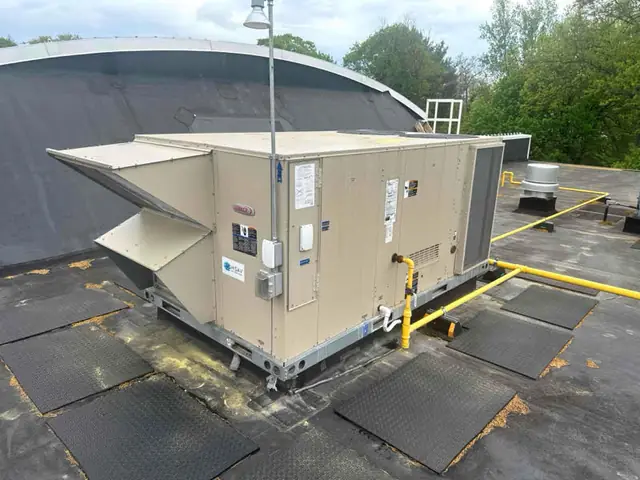
A commercial rooftop unit failing on the hottest day of the year, or short-cycling on a building with no backup, rarely comes as a surprise to the technician who finally gets called out. Most rooftop unit failures trace back to a maintenance visit that covered the easy items and skipped the ones that take longer to check. Here is what a preventative maintenance contract on an RTU should actually include, and why each item matters for a building that can't afford downtime.
Refrigerant charge and electrical components
A rooftop unit running on a slightly low refrigerant charge doesn't necessarily stop cooling right away, it just works harder and less efficiently, the same way a residential system does with a restricted filter. Over months, that inefficiency accelerates wear on the compressor. A real PM visit checks refrigerant charge against manufacturer specification rather than assuming last year's charge is still correct, and it inspects contactors, capacitors, and electrical connections for the corrosion and wear that come from a unit sitting exposed on a roof through every season.
Condenser coil condition
Rooftop condenser coils accumulate dust, pollen, and in coastal or industrial areas, a fine film that reduces the coil's ability to reject heat. A unit with a dirty condenser coil runs at higher head pressure and lower efficiency even when every other component is healthy. Coil cleaning is one of the maintenance items most often shortened or skipped on a quick visit, because it takes real time to do properly compared to a filter check.
Belt, bearing, and blower inspection
- Belt tension and wear, a slipping belt reduces airflow the same way a clogged filter does, just from the mechanical side instead of the airflow-resistance side.
- Bearing condition on blower motors, a bearing that's starting to fail gives off heat and noise well before it seizes.
- Blower wheel cleanliness, a dirty blower wheel loses airflow capacity even with a perfectly clean filter downstream.
Drainage and curb condition
A clogged condensate drain on a rooftop unit doesn't just risk water damage to the ceiling below, standing water near electrical components inside the unit is a real hazard. The roof curb and unit-to-curb seal also get checked for gaps that let water intrude around the unit's base, a slow-developing problem that's far cheaper to catch during a scheduled visit than after it's caused interior damage.
Why the difference between a real PM visit and a filter swap actually matters
A restaurant with a walk-in cooler down mid-shift, or an office building with a rooftop unit that fails on the one day it's over ninety degrees, isn't usually dealing with a sudden problem. It's dealing with the deferred cost of a maintenance visit that checked the easy items and skipped the ones that take longer. A&S Cooling has run Tristate commercial preventative maintenance contracts since 2003: the same year the company was founded on exactly this kind of refrigeration and rooftop work, because the difference between a scheduled visit and an emergency call is almost always in the items that don't show up on a five-minute filter check.
A&S Cooling Mechanical Contractors, (856) 312-8499
Call (856) 312-8499More articles
Why Your AC Still Fails With a Clean-Looking Filter
A filter that looks clean to the eye can still be restricting enough airflow to run a compressor into failure. Here's what's actually happening inside the duct.
Oil-to-Gas Conversion: What Actually Happens During the Switch
An oil-to-gas conversion touches more of the house than most homeowners expect. Here's what the process actually involves, start to finish.